
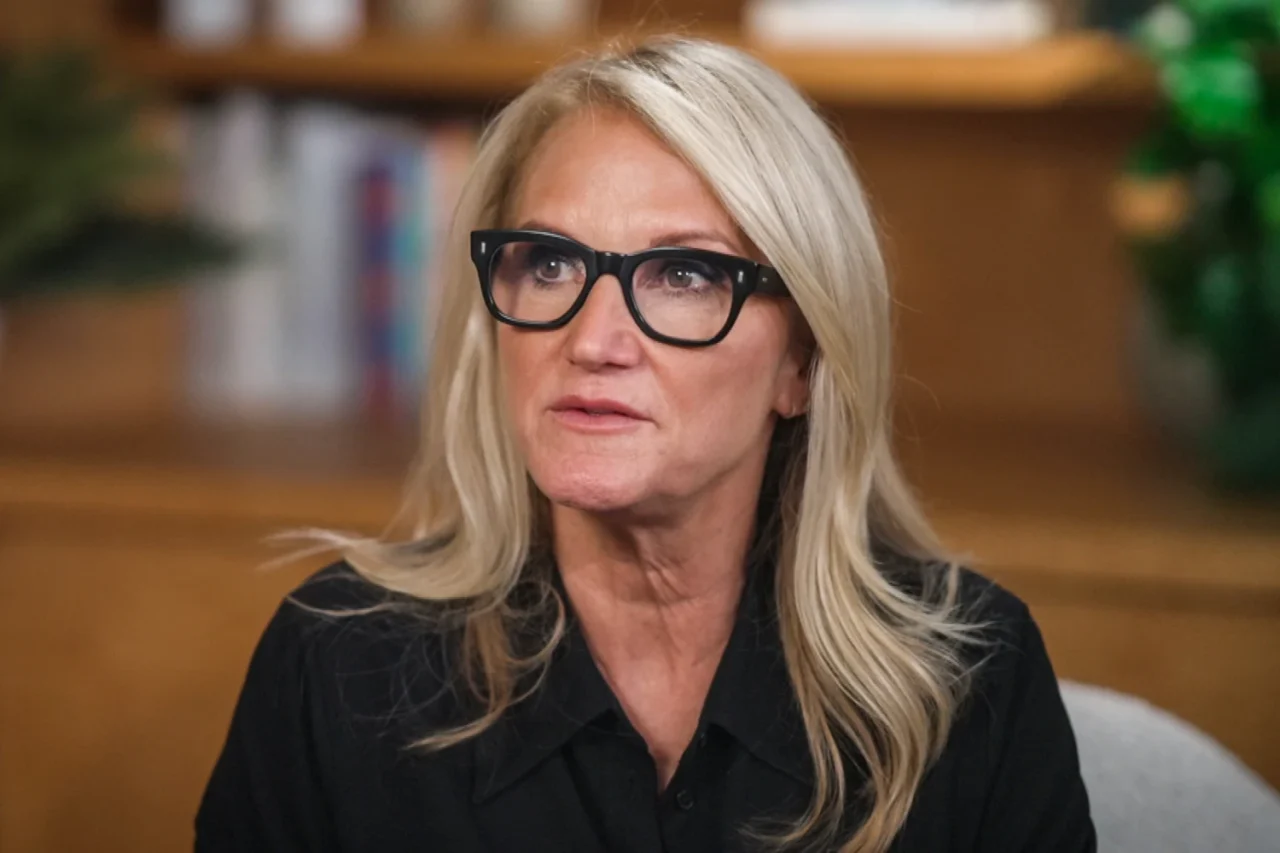
Best-selling author and self-help guru Mel Robbins recently posted a New York Times Op-Ed called Life Is Too Short to Fight With Your Family leading into the Thanksgiving weekend.
In the piece, Robbins warns against the dangers of distancing ourselves from those whose beliefs differ from our own. She warns that in the long run, creating relational and physical proximity between ourselves and loved ones we disagree with “will likely have a devastating impact on (our) happiness and well-being.”
How about the happiness and well-being of Latino people having their heads bashed in by masked thugs, Mel?
Or of kids whose plates will be empty because they’ve had their SNAP benefits cancelled on a lunatic’s whim?
How about the happiness and well-being of survivors of sexual assault who have to watch a court-adjudicated predator in the highest seat of power in our country?
Or Ukrainian families and Palestinian families being bombed and starved to death in front of the watching world because authoritarians like to stick together?
Or bullied Trans teens, Venezuelan boaters, or Somali immigrants?
Do they deserve representation at the dinner table, or are we supposed to shelve those annoying acts of treason, human rights atrocities, and lawless violence just because our father “has mastered the art of carving a turkey” or because our sister “might be judgmental,” but has “cool holiday-themed nails?”
Do we really want to spend our days in the shallows and the superficial, with people we should be able to be the most honest with?
The Let Them Theory author advises readers to bear with the faults and failings of family members, saying that the key is “learning how to accept people as they are, sometimes in spite of who they are.”
I wonder what Robbins feels is acceptable for those we allow to have relational intimacy with us? What is a bridge too far? Is anything a dealbreaker, or are we supposed to compromise the deepest contents of our hearts and subjugate our elemental moral principles out of some sense of nostalgia-induced obligation or blood-is-thicker strong-arming?
Robbins invites readers on what she calls a “thought experiment”, writing: “Imagine if you had a year left to live. Would you want to spend your last Thanksgiving resenting your father’s politics? Or avoiding your sister for something she said last Christmas? Or would you rather find the grace to focus on the positives?”
Umm, Mel, here’s the deal:
If I have one year left to live, I’m spending it being the most authentic version of myself.
I’m not biting my tongue or avoiding difficult conversations or coddling bigots.
I’m not frittering away my final months silently abiding conspiratorial nonsense, poker-facing through an anti-gay tirade, or cheshire grinning while one of my in-laws rambles about “filthy foreigners.”
I’m not wasting my holidays keeping a tenuous peace with abject racists just because they’ve been at my table before I realized who they truly were.
I’m not squandering the last of my days playing nice with brain-rotted Fox News automatons who no longer feel empathy for anyone but themselves.
I’m not taking the chance that my last breath will be one I held, because I didn’t want to make a traitorous serial predator’s cult member comfortable simply because we used to go camping together.
I don’t want to die regretting that I chose comfortable cowardice instead of the temporary turbulence of speaking my truest truth.
Of course, we should strive to be people who stay curious about those around us, people who aren’t quick to disconnect, people who invest in learning stories and bear with reasonable differences.
But at some point, it’s perfectly acceptable, and admirable, to cut ties with people with whom we’ve come to realize we are morally incompatible; not just for our mental, emotional, and physical health, but because in doing so, we will be emancipated from the shame that tells us we owe anyone proximity or permanence. When liberated in that way, we can fully advocate for the vulnerable and oppressed and marginalized instead of pretending they don’t exist just so we can have a nice dinner.
Mel Robbins is welcome to leave her morality at the door during the holidays in the name of keeping familial peace, and if you choose to do the same, that’s your prerogative.
But it’s also a perfectly valid option to set a table where blind hatred, intellectual ignorance, and phobic prejudice don’t get a place, no matter who is escorting them in.


